Design Miami.Paris 2025: Collectible And Captivating Chaos
Design Miami.Paris 2025:
A Global Forum For Collectible Design
Design Miami.Paris 2025 unfolded in Paris, redefining expectations of form, function, and artistic vision, but what does it really mean to experience design at this scale? Is it the thrill of discovering a piece that challenges the rules of form, or the quiet wonder of walking through installations where every object feels meticulously considered?
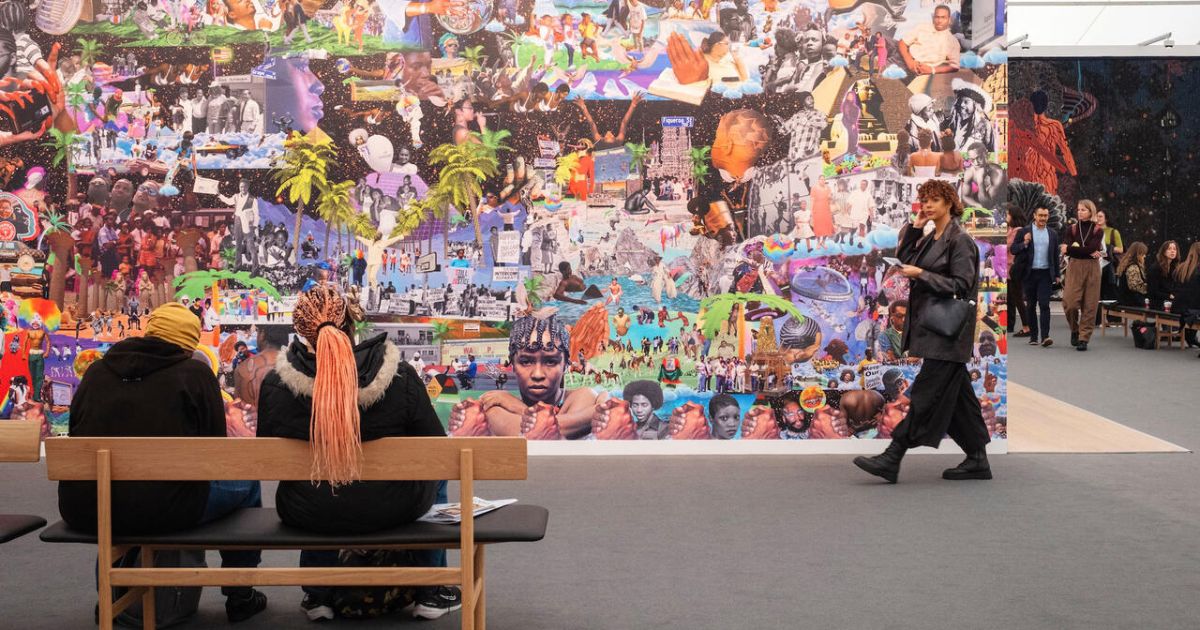
Now in its third Parisian edition, held once again alongside Paris+ par Art Basel, the fair continues to blur the boundaries between art and design, heritage and innovation. From collectible furniture to conceptual objects, it turns the city into a stage for experimentation, a dialogue between makers and materials, ideas and emotions.
Each corner seems to ask: how far can design go before it stops being functional and starts becoming art? And perhaps more importantly, how does it make us feel in our own spaces, long after we leave the fair?
A Landmark Location
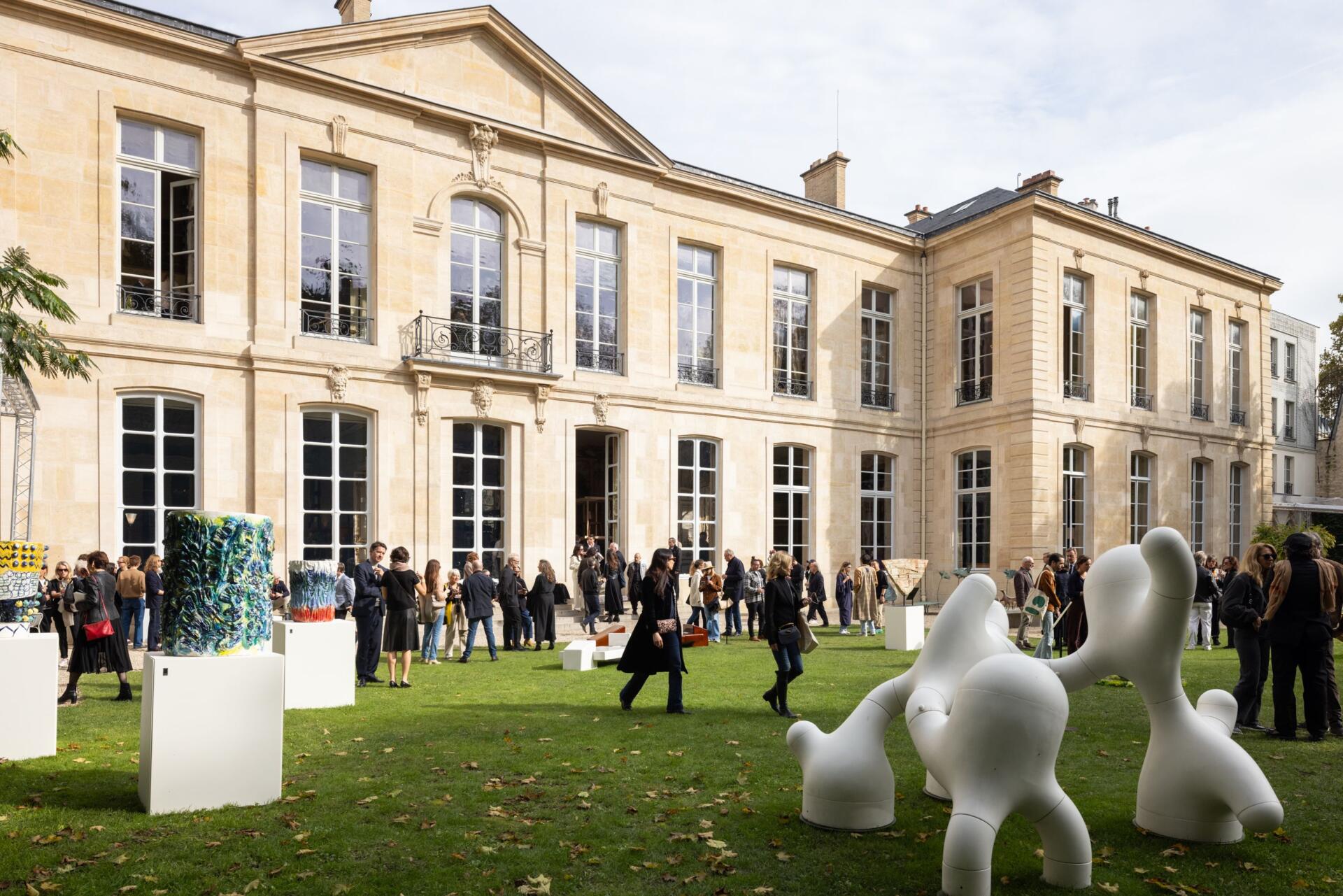
Nestled in the heart of Faubourg Saint-Germain, one of Paris’ most prestigious districts, L’Hôtel de Maisons is more than just a venue, it is a living piece of history. This 18th-century mansion, once home to generations of the distinguished Pozzo di Borgo family and later the legendary Karl Lagerfeld, sets a striking backdrop for the third edition of Design Miami.Paris 2025. But how does such a storied maison shape the experience of contemporary design?
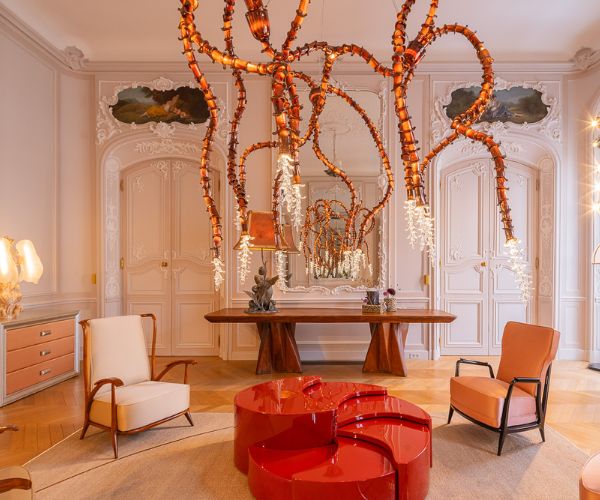
This year, over 40 international galleries converge within its walls, presenting a mix of historic and contemporary collectible design, immersive curatorial displays, and site-specific works. The result is a dialogue between past, present, and future, where every room invites visitors to question how design inhabits space, tells a story, and even challenges tradition, celebrating the intersection of form and function.
The Fair’s Award-winning Objects and Exhibitors:
In the ornate halls of L’Hôtel de Maisons, where layers of history meet avant-garde design, the awards ceremony at Design Miami.Paris 2025 elevated certain works from remarkable to unforgettable. These “Best of Show” distinctions acknowledge not just beauty, but vision, pieces that ask us to reconsider what design can be and how it lives in our world. Below are the winners and what each award signals for the future of interiors and art-object culture.
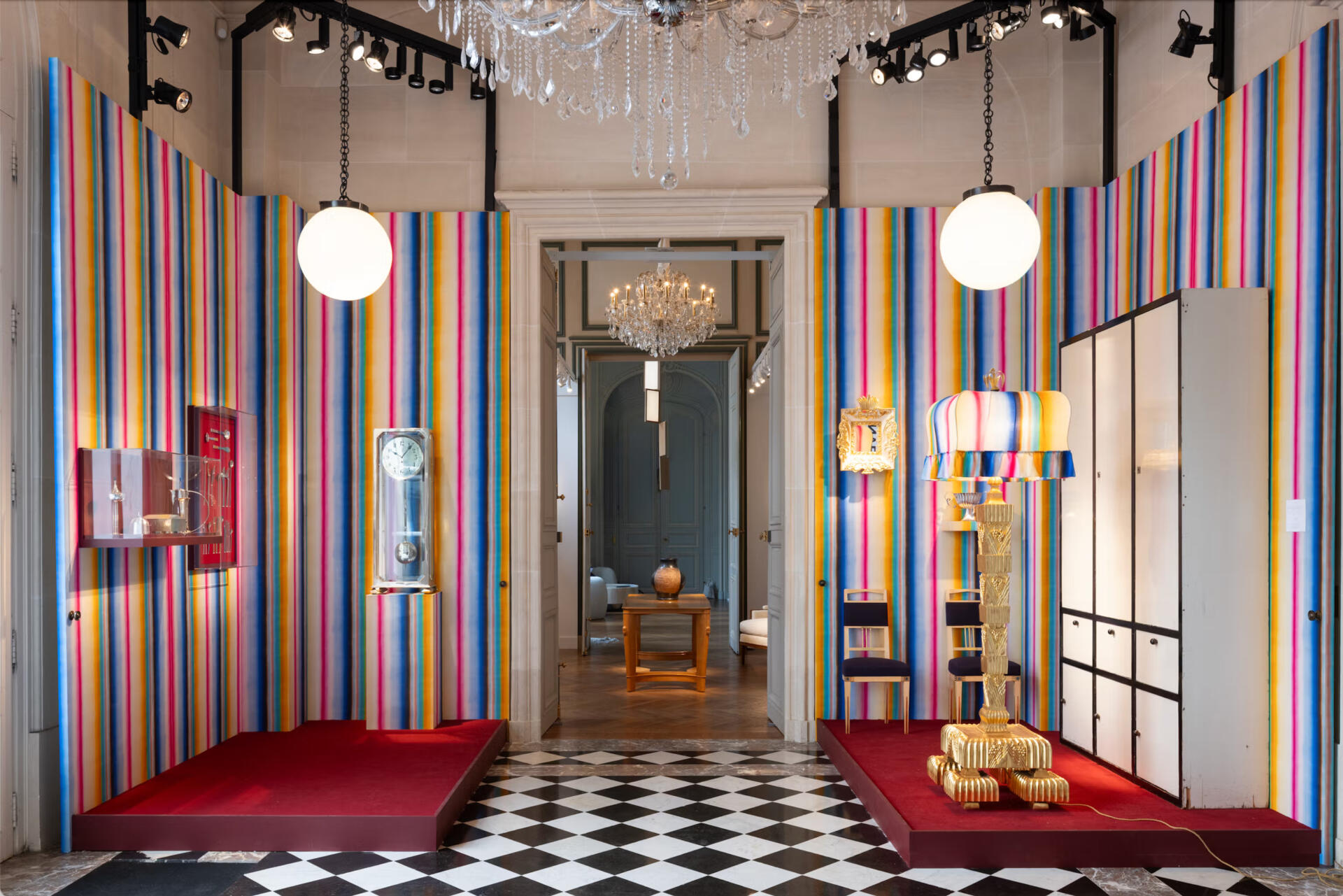
Best Gallery Presentation – Yves Macaux Gallery
As a debut exhibitor, Yves Macaux Gallery offered a tightly curated showcase that bridged early-modernist elegance and the ornate excess of the Wiener Werkstätte. Within the refined atmosphere of Design Miami.Paris 2025, their presentation echoed the fair’s broader ambition, to balance historic depth with contemporary voice, to let the dialogue between past and present unfold with clarity, precision, and just the right touch of drama.
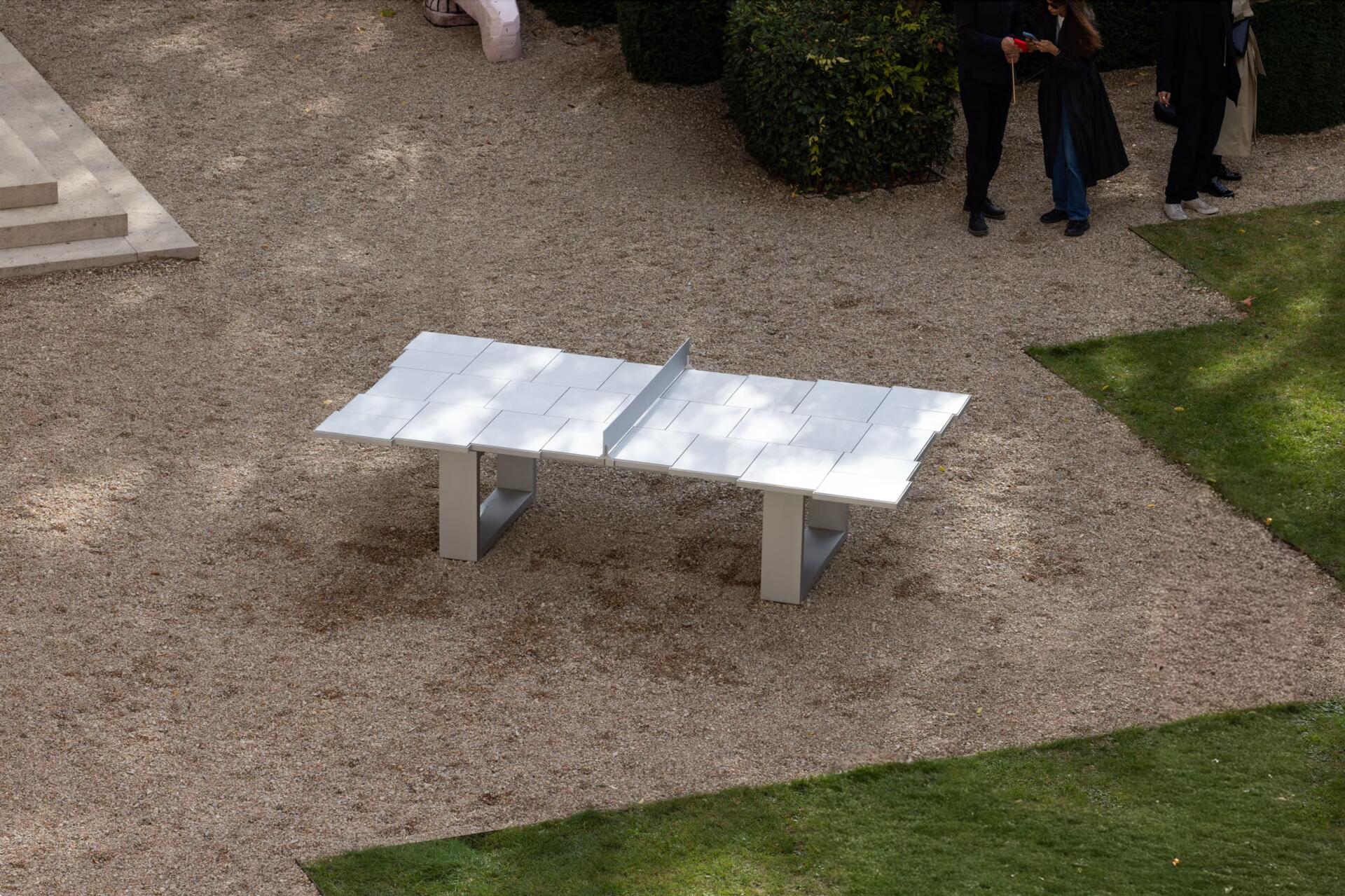
Best Design At Large Presentation – James de Wulf debuts “Resonating Ping Pong Table, Song no. 1
Among the many showstoppers at Design Miami.Paris 2025, few works struck quite the same chord, literally, as James de Wulf’s Resonating Ping Pong Table. Crafted from layers of aluminium plates tuned to a pentatonic scale, the piece transforms the casual game into a multisensory performance of vibration and tone. It’s a work that insists furniture can do more than serve; it can sing.
De Wulf, celebrated for reimagining utilitarian objects as sculptures, invites both play and pause. Each rally becomes a rhythm, each sound a fleeting harmony, an unexpected duet between human gesture and material resonance. Installed within the gilded rooms of L’Hôtel de Maisons, the table’s sleek futurism plays beautifully against the mansion’s baroque excess, bridging centuries through motion and sound.
Best Contemporary Work: Adam Pendleton — “Extended Form Three” (2025) presented by Friedman Benda
Another standout at Design Miami.Paris 2025, Adam Pendleton’s Extended Form Three distilled expressionism, minimalism, and conceptual clarity into one commanding gesture. The work’s stark abstraction and poetic restraint turned the room into a meditation on rhythm and meaning. In a fair often driven by material innovation, Pendleton reminded us that true contemporaneity lies not just in form, but in thought, where art, language, and design converge in quiet defiance.

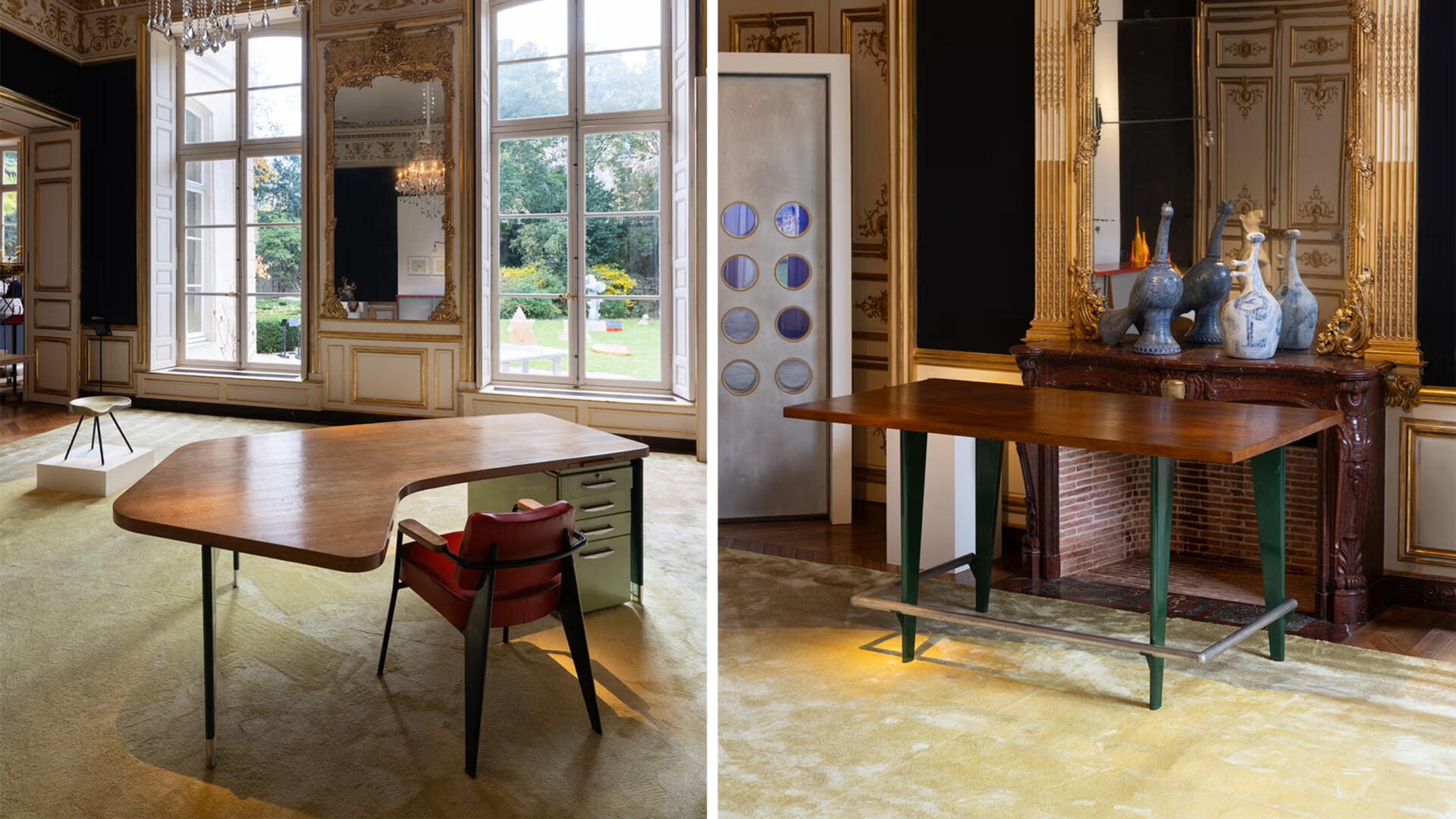
Best Historic Work: Jean Prouvé — “Bureau Présidence” (c. 1951) & “Table à Plans” (1951) presented by LAFFANOUR | Galerie Downtown
These seminal works by Prouvé pull us back to mid-20th-century modernism with renewed energy, reminding us that the past remains potent, especially when re-contextualised in a 21st-century setting. At Design Miami.Paris 2025, this dialogue between eras felt particularly alive, proof that historic design isn’t museumized; it’s continually reimagined, reshaped, and ready to inspire the next chapter of contemporary creation.
Other Must-See Projects at Design Miami.Paris 2025
Continuing our journey through Design Miami.Paris 2025, there were moments that simply couldn’t be overlooked. Wandering the grand halls of L’Hôtel de Maisons, it was impossible not to be drawn to daring material experiments, sculptural surprises, and playful interactions that captured the imagination of every visitor. These highlights didn’t just decorate the fair, they defined its energy, inviting us to pause, reflect, and marvel at the bold creativity on display.
Céramiques 1890–1930 by Galerie Maxime Flatry
Stepping into the space curated by Galerie Maxime Flatry at Design Miami.Paris 2025, visitors are immediately transported to the golden age of French Art Nouveau and Art Deco. The display presents historical ceramic works by Jean Besnard, Ernest Chaplet, and Pierre-Adrien Dalpayrat, each vase a study in form, color, and texture, capturing the bold innovation that defined the era.
To elevate the dialogue between object and environment, floral installations by Thierry Boutemy are woven seamlessly among the ceramics, creating a living conversation between past and present. Every curve, glaze, and arrangement feels deliberate, inviting visitors to linger and appreciate the daring creativity of these pioneering artisans. In this setting, ceramics are not simply decorative objects, they are protagonists, alive with movement, hue, and historical resonance.
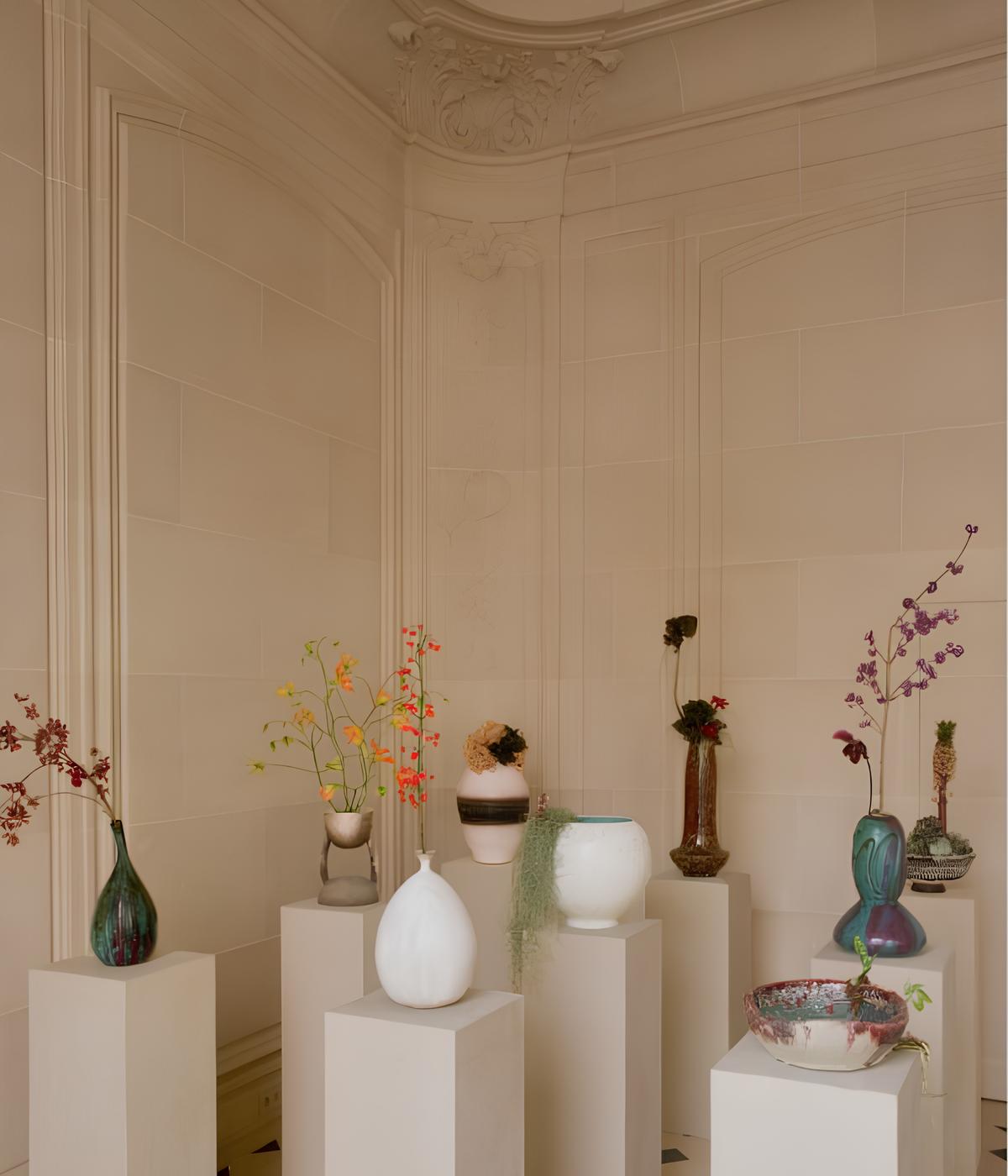
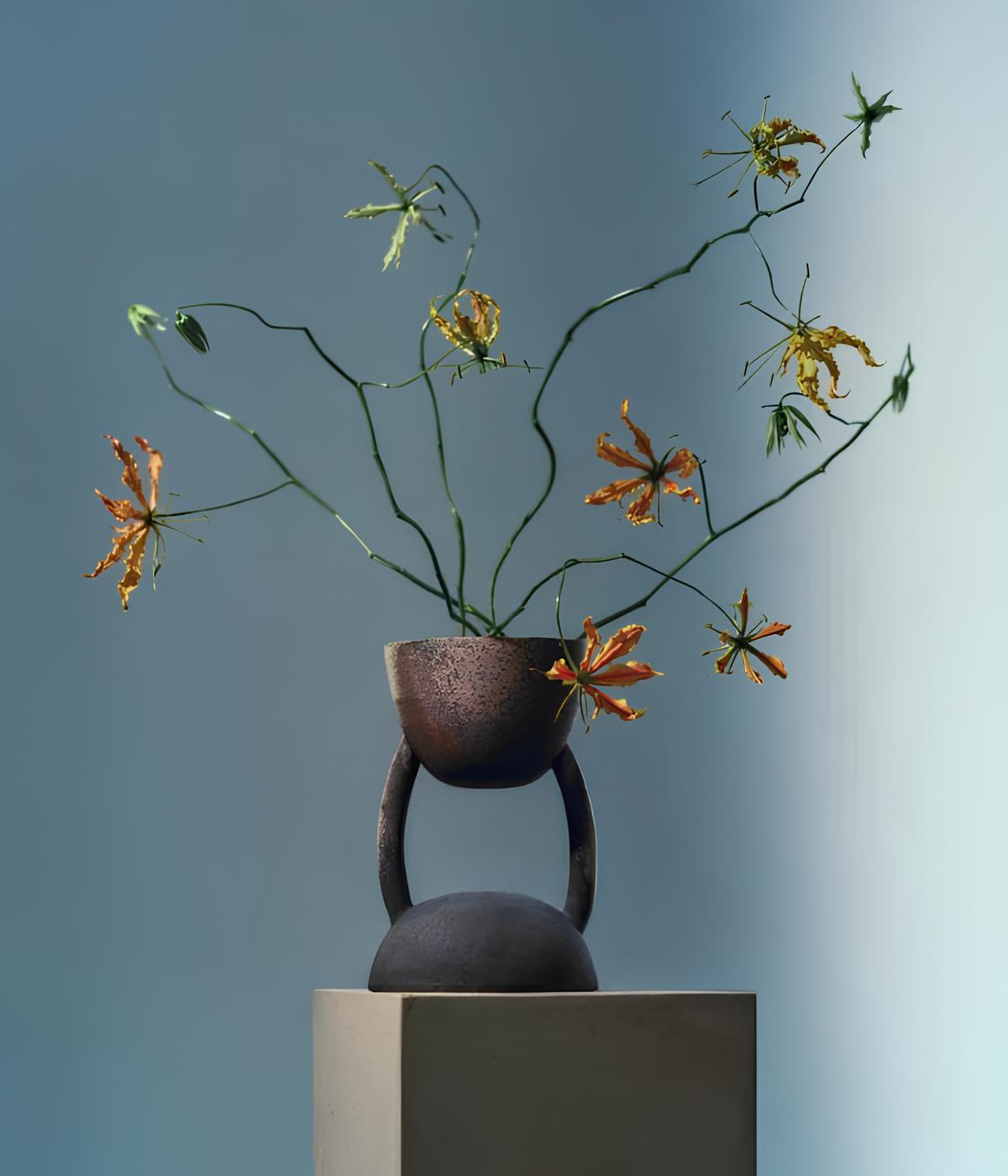
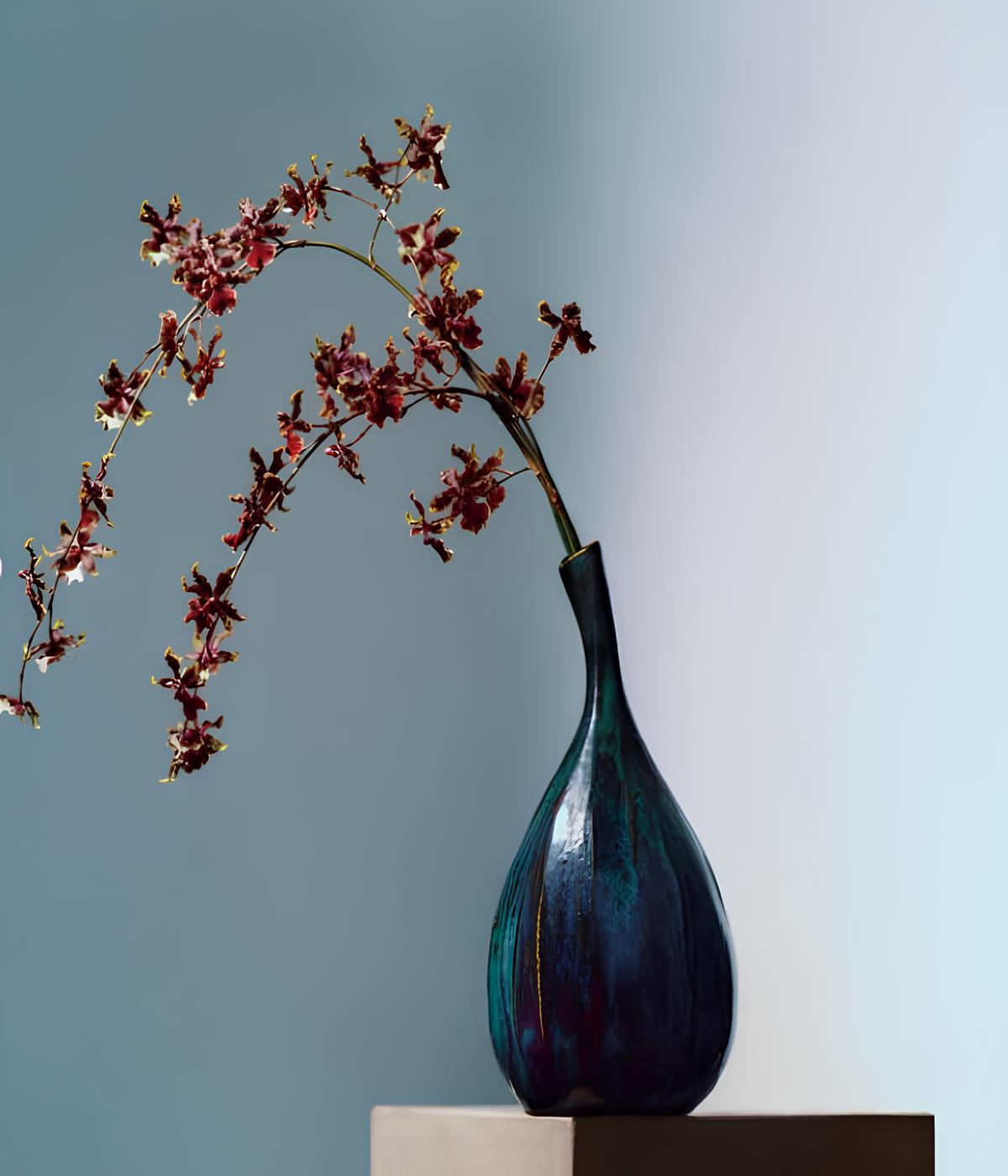
Table de François Xavier-Lalanne, chez Galerie Desprez Breheret & Galerie Gastou
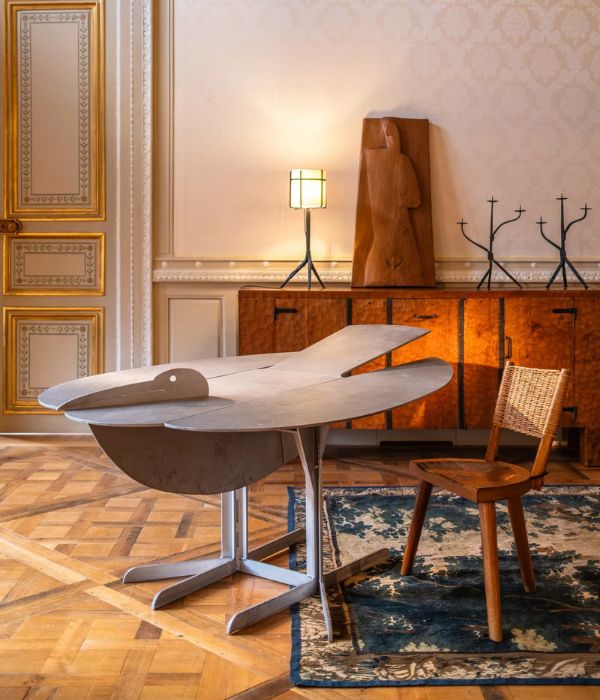
As the exploration of Design Miami.Paris 2025 unfolded, one final piece seemed to distill the fair’s spirit into a single, gleaming form: Table Oiseau d’Argent by François-Xavier Lalanne.
Presented jointly by Galerie Desprez Breheret and Galerie Gastou, the work stood as a testament to Lalanne’s uncanny ability to blur the line between sculpture and function, a hallmark of his poetic, surrealist vision.
In the soft light of L’Hôtel de Maisons, the table appeared to hover in quiet suspension, part creature, part object, entirely alive.
Its silvered plumage shimmered with movement, as if mid-flight, a reminder that Lalanne’s creations were never static: they breathe, charm, and invite wonder.
Here, fantasy meets precision, the craftsmanship so exacting it disappears into poetry. More than a piece of furniture, Table Oiseau d’Argent felt like a manifesto for the fair itself: elegant, imaginative, and ever in motion.
It captured what Design Miami.Paris 2025 ultimately celebrates, the enduring dance between art and utility, between the dream and the design that brings it to life.
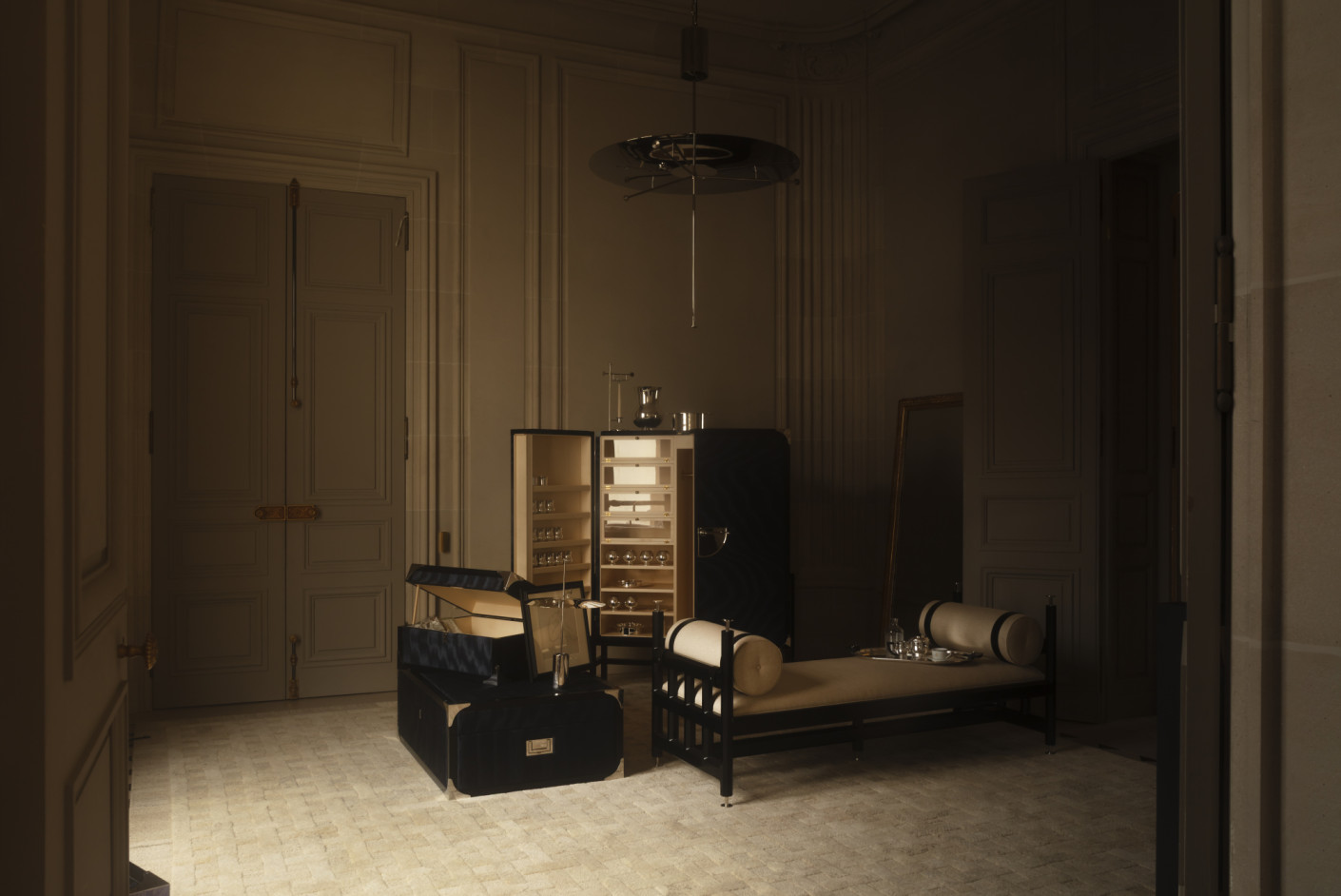
Le Bain du Collectionneur by Edgar Jayet, presented by Galerie Ragoné
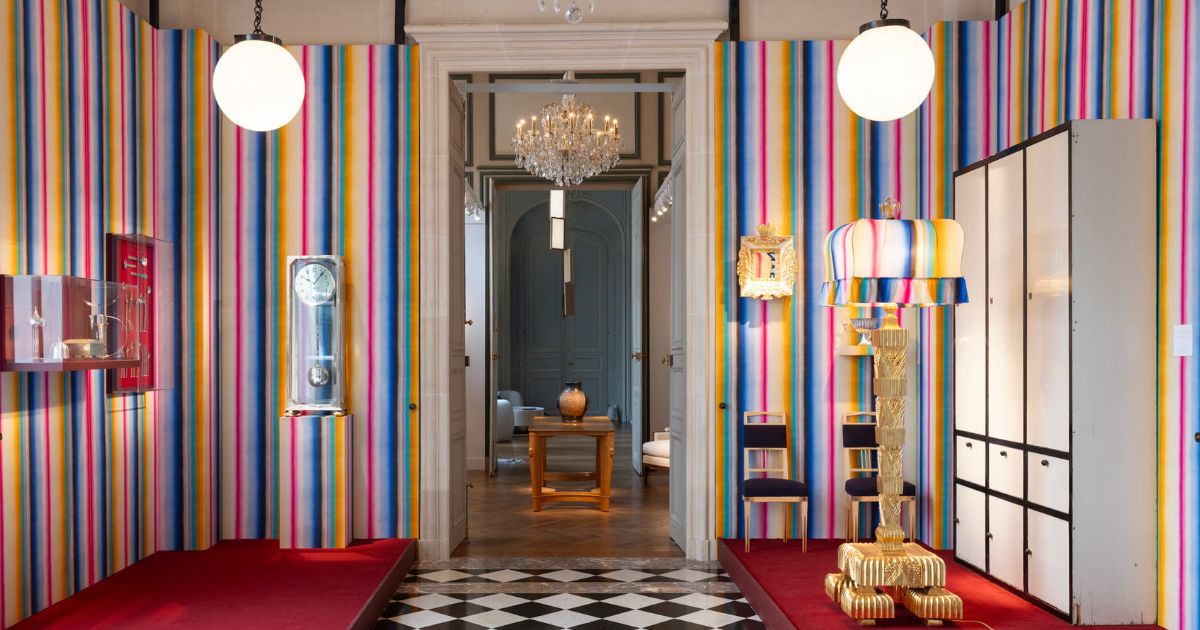
Continuing our journey through Design Miami.Paris 2025, one might wonder: what happens when the intimacy of a collector’s world meets the grandeur of French Art Deco? Galerie Ragoné invited Edgar Jayet to answer precisely that question with his commission Le Bain du Collectionneur, supported by Maison Lelièvre. Drawing inspiration from Jacques-Émile Ruhlmann’s iconic Pavilion of the Collector at the 1925 Exposition Internationale des Arts Décoratifs, Jayet reimagines the collector’s dressing room as a refined universe, where each cabinet, trunk, and daybed embodies the art of French art de vivre.
Executed with the mastery of six exceptional French ateliers, the installation celebrates artisanal excellence, while artworks from Galerie Dina Vierny and Galerie Chenel harmonize with silverware from Puiforcat and crystal from Saint-Louis. The result is a dialogue across time, a space where heritage, craftsmanship, and contemporary vision converge into an immersive, almost cinematic, experience.
Yves Salomon Éditions x Pierre Marie
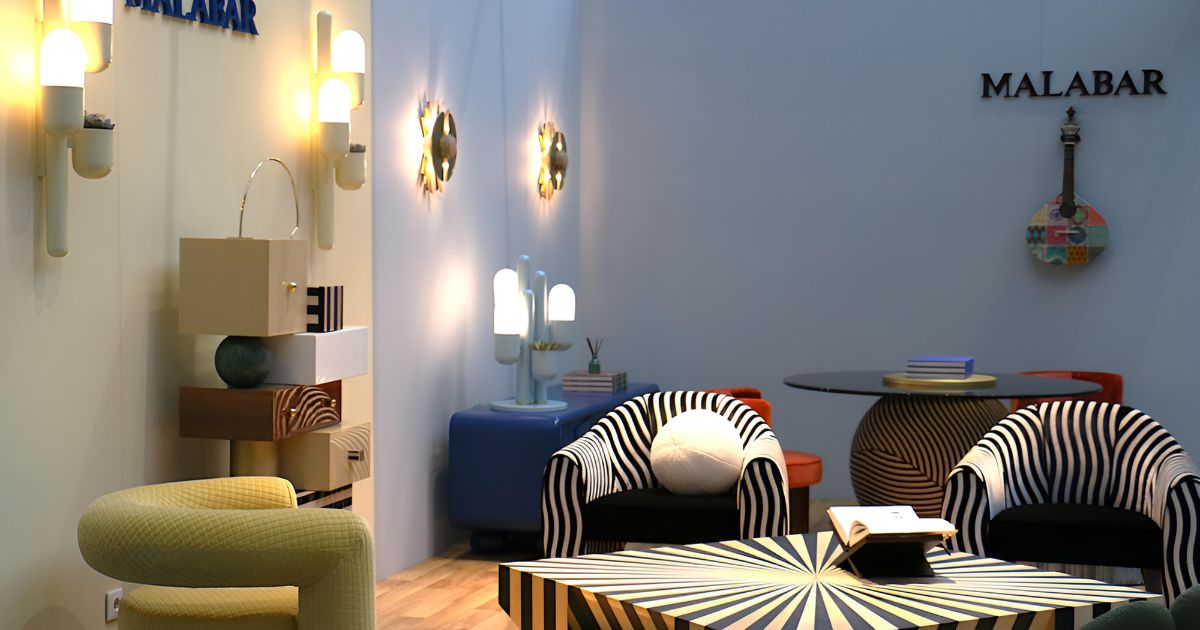
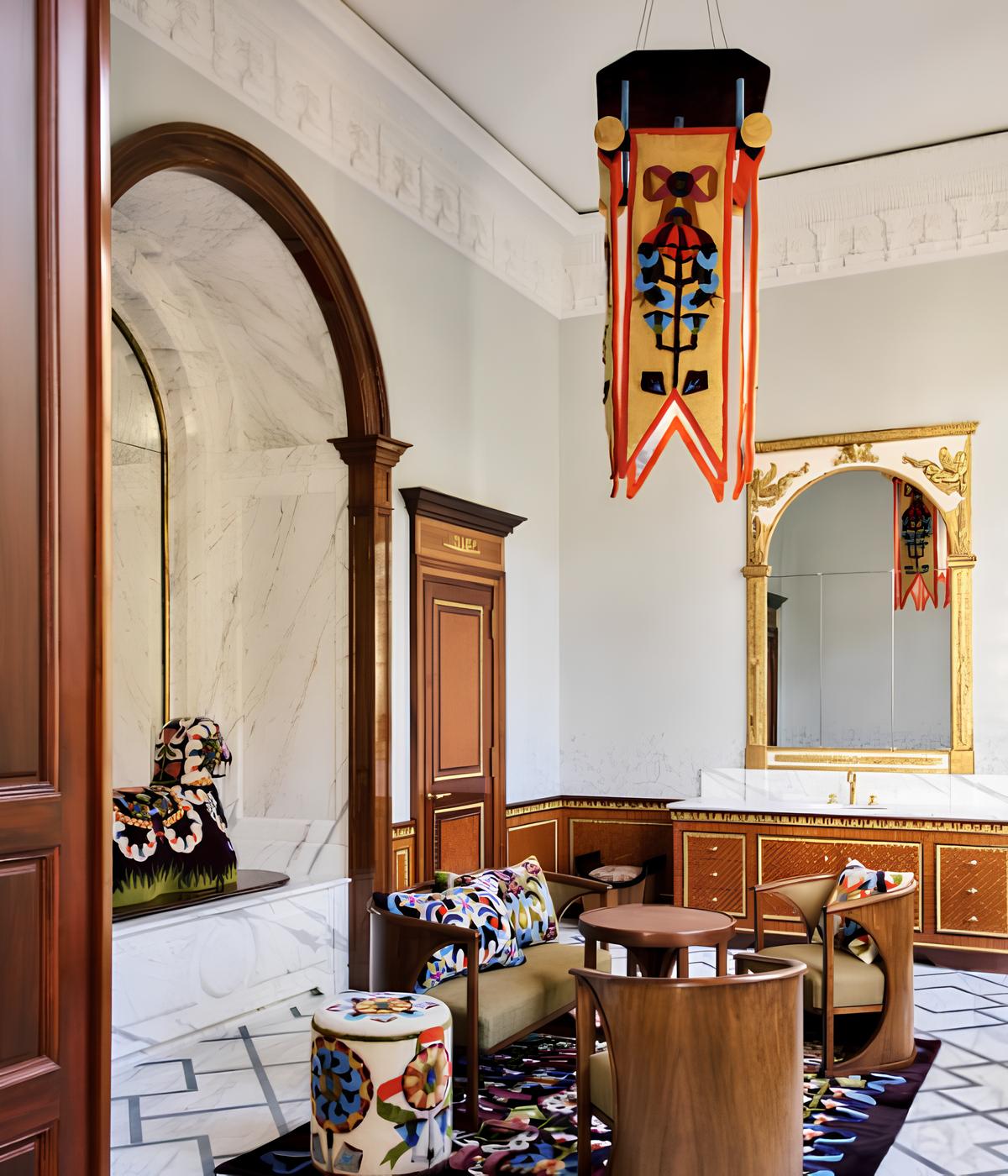
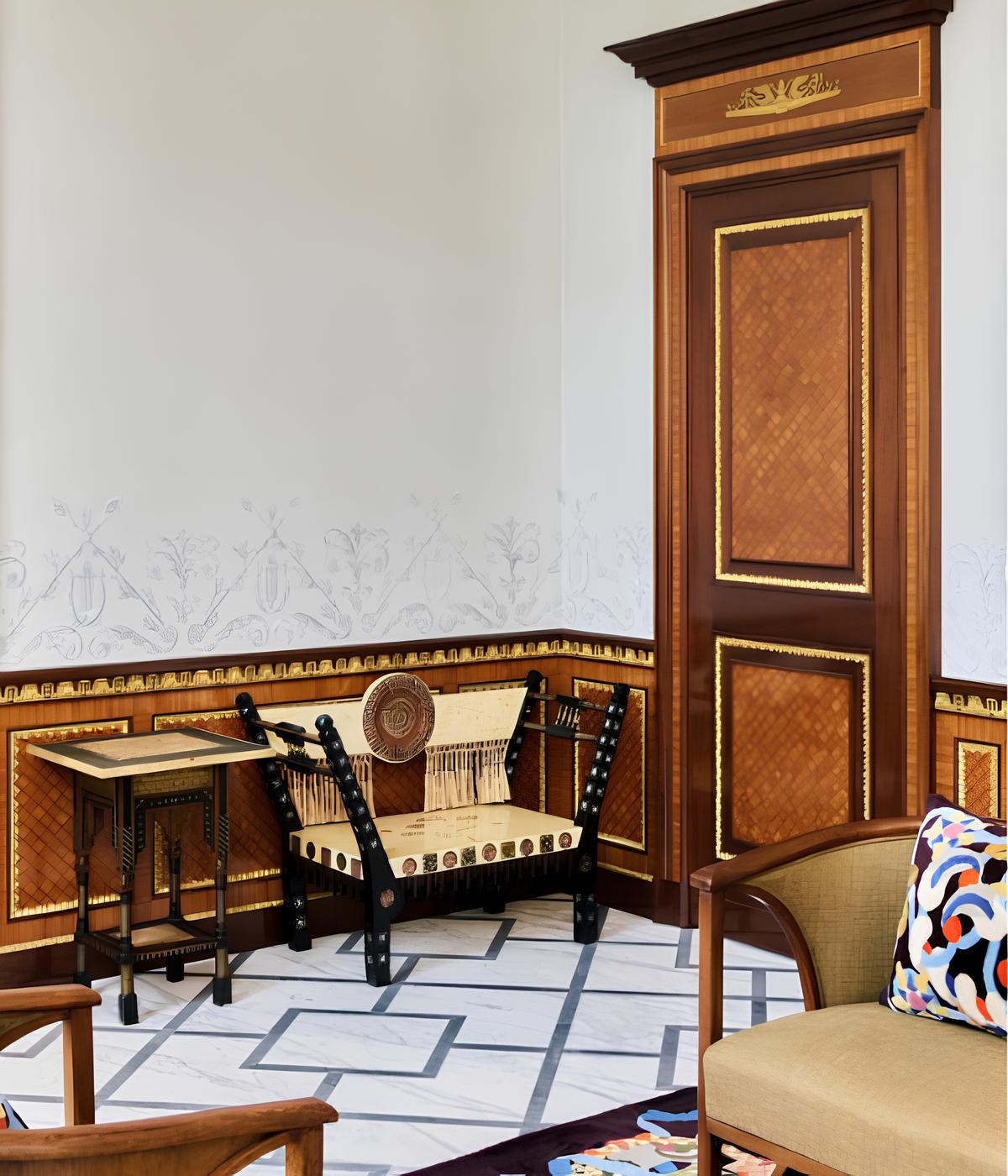
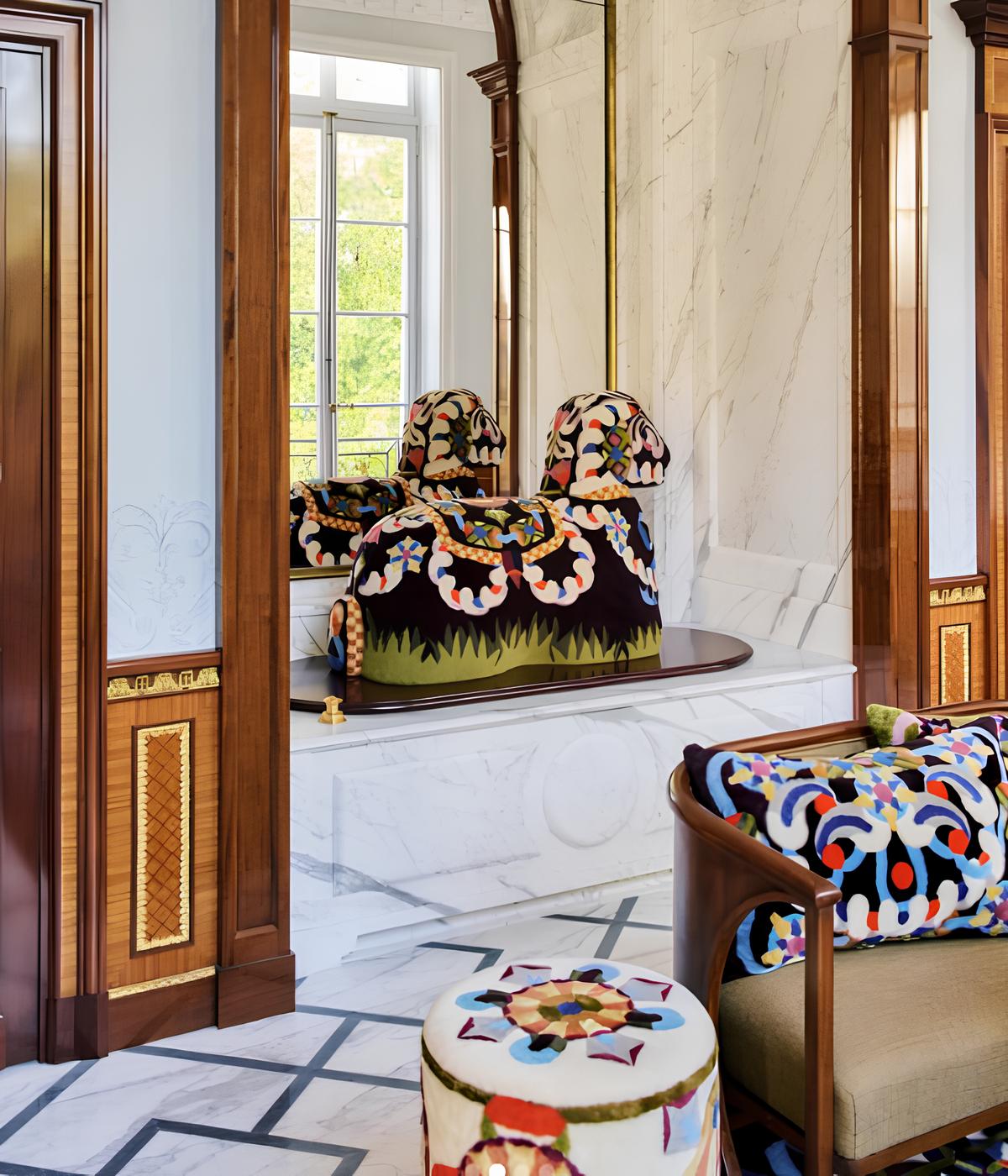
Who said fur and furniture couldn’t flirt? At Design Miami.Paris 2025, Yves Salomon Éditions unveiled its first vintage furniture collection, a daring and delightful conversation between materiality and imagination. In dialogue with Pierre Marie’s poetic universe, the pieces burst with colour and character, their bold hues and graphic motifs playfully contrasting with the warmth of wood.
The result? A tactile, almost whimsical harmony that bridges couture craftsmanship and contemporary design. It’s Parisian elegance with a wink, refined, radiant, and unapologetically alive.
The Soul Garden by Vikram Goyal, presented by The Future Perfect
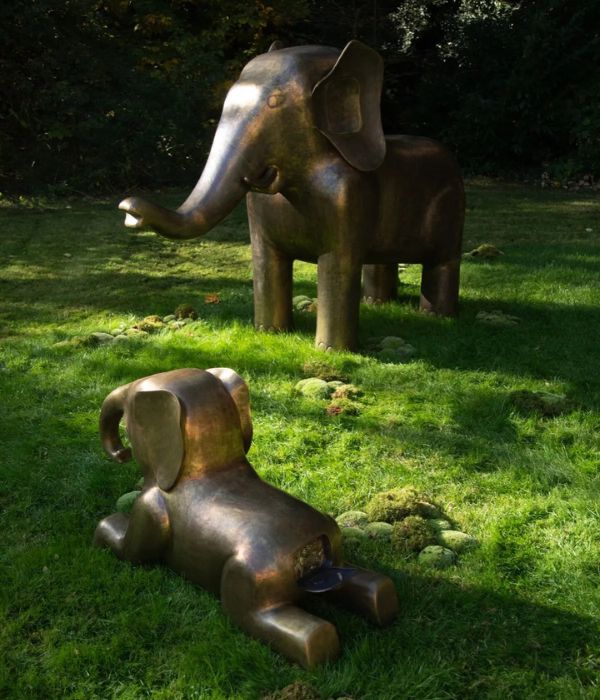
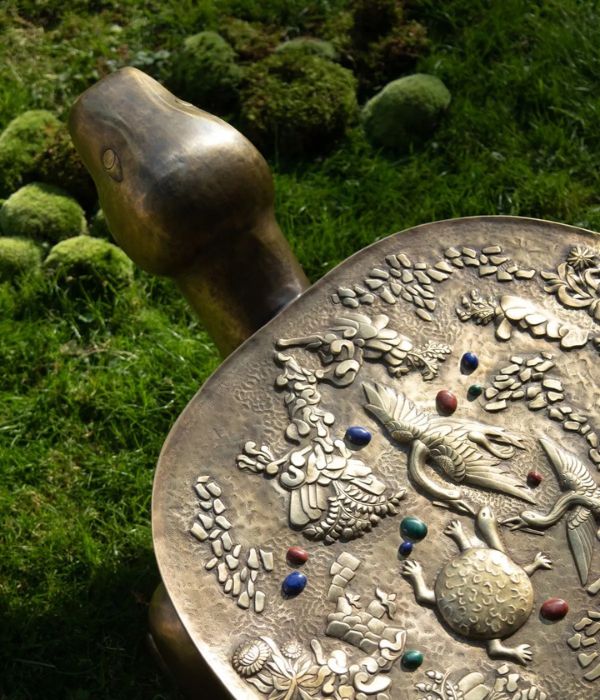
Some installations don’t just ask to be seen, they ask to be felt. At Design Miami.Paris 2025, The Soul Garden by Vikram Goyal Studio, in collaboration with Sissel Tolaas and presented by The Future Perfect, turned the gardens of L’Hôtel de Maisons into a living poem of sight, scent, and story.
Inspired by India’s ancient Panchatantra fables, Goyal reimagines animals as vessels of wisdom and memory, from the serene elephants Gaja & Karabha to the steadfast Kurma and the powerful Vyaghra. Each sculpture, crafted through the studio’s signature Hollowed Joinery technique, bridges myth and modernity with tactile grace.
Sissel Tolaas adds an invisible dimension, infusing each piece with scent, metal, air, and memory, that drifts through the garden like a whisper of ancient tales. The result is a multisensory experience that transcends form: a reminder that design, at its most profound, invites us not just to look, but to listen what the world still has to tell us.

As Design Miami.Paris 2025 drew to a close, the city felt momentarily transformed, not just by the objects on display, but by the conversations they sparked. Within the storied walls of L’Hôtel de Maisons, history and innovation met in perfect dialogue, proving that design isn’t static; it’s alive, responsive, and deeply human.
What this edition ultimately revealed is that great design doesn’t chase trends, it creates them. It blurs boundaries, ignites emotions, and reminds us that beauty is not only to be seen, but to be experienced. And as the lights dimmed over Faubourg Saint-Germain, one truth lingered: Paris will always have design, but Design Miami.Paris made sure design now has Paris.
And you? What was your favourite moment of Design Miami.Paris 2025? Share your thoughts with us!
Keep following our journal for more insights, highlights, and stories from the global art scene.